2026-09-17
You can also reduce the inefficiency, unreliability, unsafe operation, and lack of operation of an old boiler simply through a well-planned boiler upgradation, without having to purchase an all-new boiler. Over time, various parts within a boiler may wear out; this includes the burner, controls, insulation, instrumentation, and the heat-transfer part of the boiler. Boiler Repairs and Maintenance can help identify worn or damaged components and determine whether they can be repaired, serviced, or replaced as part of the upgrade.
Replacing parts individually helps to limit this, as some components can be retained and still be of use. When determining if it is time to upgrade part of the system, industrial plants consider the condition of the boiler, operational performance, maintenance history, fuel usage, and future demand. Once an assessment of the system by specialists determines that retrofitting certain parts is effective and provides enough benefits to outweigh simply replacing them.
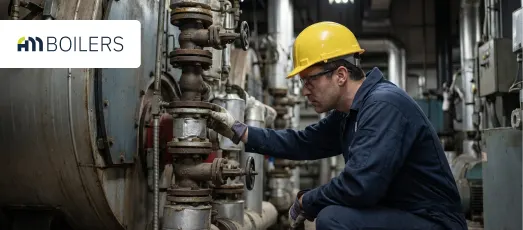
Boiler upgrading services are where an installed boiler is surveyed, and a set of components or systems are modified, or added, in order to improve its performance, efficiency, safety, reliability, or control. This involves leaving the main body of the boiler in place and replacing components where they may be considered restrictive. The components that could be altered are, for instance, burner, combustion control, instrumentation, insulation, economizer, feedwater system, or automation, according to the "technological survey". Unlike boiler installation for industrial applications, which involves setting up a new boiler system, boiler upgrading focuses on improving an existing installation.
A typical assessment considers:
In essence, the focus will be on providing improvement with tangible operational value and not component replacement based on its age.
A boiler upgrade can range from a targeted component replacement to a broader modernization project. The scope should be based on actual performance deficiencies as opposed to being based on a standard package that every boiler gets.
Burners could be older with narrow turndown, inadequate fuel-air control, or poor combustion characteristics, with a replacement or upgrade giving better fuel-air control and possible fuel savings due to eliminating waste. The U.S. Department of Energy lists "energy-efficient burners" and "better combustion control" as measures to "reduce the loss from the current boiler performance."
Up-to-date controls can be much more effective at monitoring and tuning fuel, air, pressure, temperature, and load conditions. If a facility is considering a boiler upgrade service, the benefits can be realized on those boilers where outdated controls limit stability or tuning is required through manual adjustments.
Useful heat from flues is recovered in equipment called economizers and various other heat recovery units and is returned to the feed water. Less fuel is therefore needed for raising feed water to operating temperature.
Damage or deterioration of insulation and refractory will lead to further increases in heat losses as well as undue thermal shock to the equipment. Restoration to correct integrity can offer benefits such as improved thermal efficiency and protection of nearby components.
Damage or deterioration of insulation and refractory will lead to a further increase in heat losses as well as undue thermal shock to the equipment. Understanding marine boiler problems and solutions can also help identify similar issues in marine boiler systems and determine the appropriate corrective measures. Restoration to correct integrity can offer benefits such as improved thermal efficiency and protection of nearby components.
Sometimes a focused upgrade to the boiler can make it more flexible without needing to replace the whole system. Before making a decision, facilities should take a look at their maintenance history, how the boiler is being used and what service needs are. Knowing how often a boiler should be serviced in the UAE can help companies plan checkups. This also helps spot any repeated problems that could affect performance and need fixing.
The primary motivation to upgrade is to benefit from better performance characteristics of an asset at work, without changing it prematurely when the boiler might still be structurally sound. It can improve efficiency, reliability, and control while extending the useful service life of existing equipment. This approach can also reduce the disruption and investment associated with replacing a boiler that remains suitable for continued operation.
Optimize combustion through the use of advanced burners, air-fuel controllers, oxygen trim, and enhanced combustion monitoring systems. Guidance from DOE suggests that close air-fuel ratio control and oxygen trim may aid in efficiency improvements in the boiler, particularly over load changes. This makes boiler efficiency improvement one of the common objectives of an upgrade project.
Modernized controls and worn component replacement can improve operating stability and reduce recurring equipment issues. They can also aid the operator in reacting better to varying operating conditions and prevent smaller incidents from escalating into more serious disruptions.
Upgrading selected components can allow a structurally sound boiler to remain useful for longer while improving systems that have become outdated. This can help defer a full replacement while keeping important boiler functions aligned with current operational requirements.
By having modern instrumentation and controls available, an operator can have more immediate access to pressure, temperature, combustion, water conditions, boiler performance, etc. Visibility can aid in quicker detection of anomalous situations and correction before it has a wider impact on the operation of the boiler.
When deciding whether to continue upgrading an existing boiler, it is also useful to compare the potential benefits with the option of repairing or replacing the equipment.
Not every component needs to be replaced during an upgrade. A technical inspection helps determine where investment is most justified. This allows the upgrade to focus on components that need improvement rather than replacing parts unnecessarily. It also helps ensure that the available budget is directed toward changes that can provide practical performance benefits.
Burners and Fuel Systems: Burners can be upgraded to improve combustion, firing control, turndown, and fuel-air management. The new burner's appropriateness should be evaluated for compatibility with the boiler furnace and its fuel system. This could support the most efficient mode of boiler operation by providing stable combustion.
Controls and Instrumentation: In terms of controls, there is an option to upgrade existing instrumentation, sensors, transmitters, flame safeguards, alarms, and monitoring equipment to enable greater precision in control and better visibility for operators. Upgrades can enhance operator detection of variations in boiler performance. Operators can better respond to operating conditions.
Economizers and Heat-Recovery Equipment: An economizer can recover heat from flue gases and transfer it to feedwater. DOE guidance identifies feedwater economizers as a boiler efficiency measure. This can reduce the energy required to heat feedwater and support overall boiler efficiency.
Insulation and Refractory: The defective lagging or refractories should be either repaired or replaced to minimize heat losses and to provide support to the boiler structure. Both conditions can be optimized if they are serviced appropriately to gain thermal efficiency.
Pumps, Fans, and Drives: Auxiliary equipment such as fans, pumps, and drives can also be reviewed. Variable-speed drives may help match equipment output more closely to changing operating requirements. Upgrading these components can improve control of auxiliary systems and help reduce unnecessary energy use.
For use boiler upgrades may also need parts that are made or changed so they fit the ship’s special operations. Boiler fabrication services for the marine industry can help make, change and replace boiler parts when normal parts are not right, for the required set up.
Before deciding to upgrade boiler equipment, the facility should evaluate both the technical condition and the financial case. This review indicates whether the facility will be able to alleviate performance bottlenecks with an upgrade and also enables the facility to weigh up potential benefits against costs of performing the upgrade. For marine applications, comparing marine boiler repair vs replacement can also help determine whether upgrading specific components is more practical than repairing the existing system or replacing the entire boiler
Boiler Condition: The pressure vessel, tubes, headers, refractory, casing, and other major components should be assessed. An upgrade is generally more attractive when the boiler's fundamental structure remains suitable for continued service.
Current Performance: Fuel consumption, steam output, combustion efficiency, stack temperature, operating stability, and maintenance history provide useful evidence when determining the need for boiler efficiency improvement.
Compatibility: New components must work with the existing boiler and associated systems. Burner dimensions, control architecture, fuel characteristics, electrical requirements, piping, and instrumentation should be reviewed before work begins.
Cost and Payback: The facility should compare the expected improvement against the project cost and anticipated operating savings. The DOE case studies show that making changes to control systems and combustion processes can lead to performance even though the results can be different depending on the boiler and how it is used.
Future Requirements: Think about how production might change how hours the system will run, what fuel will be available, what emissions rules will be in place and what automation will be needed in the future. This makes sure that an upgrade stays useful for a time.
Sticking to a maintenance plan can also help find problems early before they turn into big issues that require a major upgrade.
A professional boiler upgrading services project should follow a structured process rather than replacing components without a clear performance objective. The clear scope guarantees that each change targets and fulfills distinct functional or performance needs.
The existing boiler is inspected, and operating data is reviewed to identify performance limitations and recurring problems. This provides a clear basis for determining which areas require attention. It also helps establish performance benchmarks for the upgrade.
The service provider determines which components should be repaired, replaced, retrofitted, or modernized based on the assessment. The scope should focus on improvements that address identified operational requirements. This helps avoid unnecessary modifications and costs.
The proposed modifications are checked for technical compatibility, installation requirements, safety considerations, and integration with existing systems. Detailed planning also helps identify potential installation challenges before work begins. This supports a smoother and more controlled upgrade process.
The approved components are installed during a planned shutdown or suitable operating window. Work should be coordinated to minimize disruption to production. Proper installation practices are important to ensure that upgraded components perform as intended within the existing boiler system.
Controls, combustion, safety devices, instrumentation, and upgraded equipment are tested after installation. Performance should then be compared with the agreed operating objectives. Any issues identified during commissioning can be addressed before the boiler returns to normal operation.
Operators should receive relevant documentation and operating information. Post-upgrade monitoring helps confirm whether the expected improvements are being achieved. It also provides useful information for future maintenance and performance reviews.
Professional boiler upgrading services can provide several benefits when the existing boiler remains suitable for continued operation. This can be more cost-effective, reliable, and offer greater control over operation without a full replacement of the boiler. In addition to tackling specific performance problems, an original boiler can remain online.
Businesses facing repeated problems should also be aware of failure methods so businesses can decide whether to repair, upgrade or replace.
The provider should assess the boiler’s condition, operating requirements, and compatibility before recommending any modifications. This helps ensure the upgrade delivers practical performance improvements without creating new operational or maintenance issues.
Look for a company that can:
The supplier should also explain to the customer why each change is recommended and the level of performance that they should be expecting the installation to achieve.
The ability to compare a replacement with an upgrade with existing repairs or replacements is where a supplier with more boiler engineering knowledge comes into play.
Al Mufaddal Boiler offers boiler engineering assistance, including inspection and repair, maintenance, fabrication, tube work, refractory and insulation, economizer work and technical support. Its general capability enables an industrial boiler upgrade to be scheduled in conjunction with the state of other boiler systems, rather than on an individual basis. The company has a boiler workshop in Dubai that can provide pressure-part fabrication, major overhauls and bespoke modifications if necessary.
Inspection and maintenance knowledge can assist in understanding whether parts would need to be repaired, upgraded or modernized depending on their actual condition. Ongoing fault finding, servicing, and performance monitoring after the upgrade can additionally highlight beginning issues and safeguard the value of the investment. For UAE industrial operators, boiler refurbishment can be viewed as part of an extensive reliability plan, supporting better maintenance and future upgrade planning.

Boiler upgradation could be a suitable option when a boiler's framework structure is deemed to operate for many more years. A proper upgrade can ensure an increase in efficiency, control over the operating aspects, better reliability, and an extended service life of the machinery. It is less disruptive and less labor-intensive than a full unit replacement.
Al Mufaddal Boiler has inspection, fabrication, maintenance, repair, and engineering capabilities and is dedicated to following lifecycle management for upgrading marine and industrial boilers in the UAE.

