2026-09-08
A well-planned boiler installation is critical for an industrial plant that needs reliable steam or hot water. Everything from choosing the equipment to preparing the space, attaching fuel, water, and pipes, and controls and safety equipment impacts the boiler's long-term life and performance, and an installation that goes wrong can result in poor efficiency, difficult servicing, costly downtime, and safety hazards.
Proper installation allows the boiler to be connected appropriately and brought into service according to the desired conditions of operation. For an industrial plant, the ultimate aim is not so much in starting a boiler as it is in building up a safe, efficient, and reliable system that will meet production needs reliably while still being as easy to inspect and service as possible.
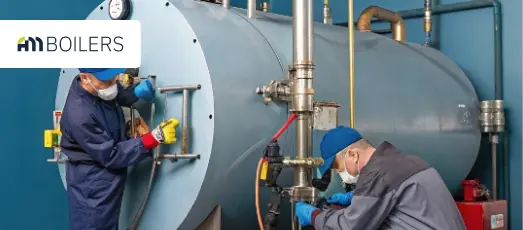
Boiler installation includes the technical job involved in preparing the site, mounting, coupling, checking, running up, handing over the boiler to take into service, etc. In an industrial complex, installing a boiler means very much more than to leave to position the unit onto a foundation. Scope depends upon the type, capacity, and fuel of the boiler; operating pressure, plant layout, replacement task or new construction work, etc.
Typical activities include:
The planning for a new boiler installation should commence before the equipment arrives on-site. The access path, lifting method, points of connection, clearances, utilities, and access for subsequent boiler repair and maintenance should all be discussed. By addressing these practical considerations ahead of time, potential issues can be avoided.
An industrial boiler functions within a system with feedwater, electrical power, fuel, steam, electrical power supply, controls, combustion air security tools, and machinery. Professional industrial boiler installation connects all these components.
Improved Operational Safety: Boilers are subject to both pressure and high temperature; fuel-fired systems employ combustion. Because of this, safety valves, pressure, water-level controls, and alarms & shutdown systems must be appropriately installed and function-tested before operation. Expert installation staff also help to interface safety requirements with any lifting, hot works, electrical works, pressure testing, and fuel-system works.
Better Operating Efficiency: Controls, commissioning, piping, insulation, burner setting, and combustion-air supply, in addition to burner adjustment, affect boiler output and performance. A good job of installation provides appropriate operating conditions for high boiler efficiency.
Reliable Plant Integration: Most industrial boilers are also provided in line with the local system, such as existing steam headers, condensate, feedwater, fuel, power, automation platforms, and the like. This process is a consideration during professional industrial boiler installation prior to connections being finalized.
Easier Future Maintenance: Sufficient access must be provided for maintenance and service work. Space should be taken into account during installation for all relevant components such as burners, valves, tubes, instruments, viewing access, etc.
This forward-looking approach can make future boiler maintenance service safer, faster, and more practical.
Boiler designs vary. Installation procedures are influenced by size, pressure requirements, fuel type, intended use, and related equipment.
In a fire-tube boiler, hot combustion gases flow through a series of tubes within a surrounding water space. For installing an appropriate boiler burner, flue, feedwater, blow-down, and safety attachments, adequate access for inspection and cleaning is needed.
In water-tube boilers, the water is circulated inside tubes, and the hot gases surround the tubes. They are normally of higher capacity than fire-tube boilers and involve comparatively complex piping circulation, instrumentation, combustion, and control systems.
Waste heat recovery boilers generate steam or thermal energy from an exhaust stream or process. Therefore, installation of such boilers needs to take account of exhaust characteristics, ducting arrangement, heat transfer surface design, bypass arrangement, and end process demand.
By reducing onsite assembly, modular systems and skid-mounted systems allow more fabrication and preparatory work to occur before units arrive onsite. They can also have merit if your site is difficult to access or the timeline necessitates a rapid installation.
The use of commercial boiler installation in hotels, hospitals, offices, or commercial buildings is very common. Whilst this type of boiler is not quite a heavy industrial installation, these still need careful consideration of fuel, ventilation, water, controls, safety, and commissioning.
The technical and operational issues can be detected during the system installation. Each step of installation, including site visit, arrangement of equipment position, piping, integration of the system, testing, and handover, should be planned and verified in detail. This way not only ensures the installation can run without delay, but also ensures the system operates reliably, and the boiler can operate safely.
The available space, foundation condition, traffic ways, ventilation, utility access, fuel source, drainage, and tie-ins are examined by the engineers. The demands required of the system for steam or hot water are also reviewed so that the unit size is correct.
Selection of the boiler to suit capacity, operating pressure, fuel, temperature, load profile, feedwater conditions & future needs is to be considered here. In parallel to that, the selection of auxiliary equipment and the interface points.
The basis must contain the size, weight, and the operating conditions of the boiler. Once delivered to the worksite, the equipment should be placed and leveled out in the approved design layout, leaving a safe working space around.
Steam, feedwater, condensate, blowdown, fuel, drain, and other necessary connections may be installed. The piping shall be supported properly and shall be so routed and arranged as to be inspectable and accessible for repair.
The burner is then plumbed into the fuel and combustion-air systems. After this, the electrical, control, instrumentation, alarm, and interlocks will be installed and tested together. These checks help confirm that the burner responds correctly to operating conditions and that the control system can detect and respond to abnormal situations.
The completed system shall be inspected and tested before going to on-stream service. Typical tests may be determined by the project and can include pressure testing, hydro-testing, leak testing, combustion testing, control system testing, safety device testing, and performance testing.
Operation data, test records, maintenance advice, documentation, and operator training all comprise part of the last stage. Operators should be aware of operational variable values, alarms, shutdown processes, and routine checks prior to operation of the system.
Several requirements should be reviewed before installation begins. These include site access, foundation capacity, fuel supply, feedwater quality, ventilation, flue arrangements, electrical connections, and control systems. Reviewing these requirements in advance helps ensure that the boiler can be installed smoothly and integrated properly with the facility’s existing infrastructure.
Safety should be considered throughout the project rather than only during final commissioning. A practical boiler installation checklist can help the project team verify critical installation points before startup.
The boiler installation checklist should cover:
Installation should be performed by appropriately qualified personnel, with relevant permits, isolation procedures, HSE controls, and testing requirements followed throughout the project.
Installing an industrial boiler includes several technical steps. Many issues may arise later because of small details during design or during installation. From wrong boiler selection or inadequate pipework to poor site conditions and rushing the commissioning, any of these could harm the boiler's performance, reliability, and safety, as well as project costs. Understanding common marine boiler problems caused by improper installation can help prevent costly issues before commissioning.
A boiler chosen solely by maximum theoretical demand may run at low efficiencies during normal operation; a balance has to be struck between peak and normal loads, operating profile and stand-by considerations, and likely future expansion of demand.
Evaluate before starting: steam, water, fuel, electric, and control connections. If the existing system should be redesigned for new equipment. This helps prevent compatibility issues, installation delays, and unexpected modifications during commissioning.
Poor piping design, poor support installation, pipe runs, and poor access could impact future reliability. This can lead to premature wear, difficult maintenance, and unnecessary downtime during future servicing.
Commissioning is a lot more than the mere activation of the boiler. Combustor control and conditions, pressure, water level, and the control and safety of alarms and interlocks should be checked.
But the advantages of a professional installation extend beyond commissioning! A correctly carried out installation also serves to improve reliability, increase safety, and make future inspection and maintenance easier, helping avoid downtime and operating problems that are unnecessary.
Improved Reliability: Properly installing the assembly, connections, controls, and burners, as well as testing, makes for a sound basis for reliable operations.
Better Safety: It is natural for experienced installation teams to already appreciate the interaction between pressure parts and combustion apparatus and instrumentation together with piping and protection systems so that safety can be considered from the start.
Easier Maintenance: Proper access and accurate installation documentation make future inspection and servicing more manageable. After commissioning, facilities should continue with structured preventive maintenance using an industrial boiler maintenance checklist.
Better Lifecycle Value: By using a professional installer, you may be able to eliminate some unnecessary integration problems and build a more robust base for reliable equipment life and productivity.
Al Mufaddal Boiler specializes in the design and maintenance of boilers for industrial use. These services also span fabrication, inspection, repair, and technical expertise with a view to integrating installation demands with ongoing operational conditions.
They also offer boiler inspection, tube work, fabrication, refractory, and insulation services, economizer work, repairs, and maintenance. Additional experience can be extremely helpful if an installation contains supplementary boiler systems or if there are potential needs for maintenance or service in the future.
Al Mufaddal Boiler has a full boiler workshop located in Dubai for its boiler-fabrication activities and major overhauls. It has modular prefabrication capabilities enabling the construction of installation-ready units.
A testing and commissioning phase will bring equipment into service. Pressure tests, hydrostatic tests, performance tests, and control and safety tests will assess whether the system is installed and completed and is ready to operate.
After installation, boilers need servicing, repairs, and inspection. You’ll make later technical support easier for yourself by engaging with someone who knows the equipment across its operational life.
In the UAE, Al Mufaddal Boiler serves industrial plant companies by providing boiler engineering, repair, and maintenance along with our installation expertise.

For boiler installation to be successful, the scope of work covers careful preparation from selection to commissioning. Site working conditions, foundations and substructures, fuel supply, feedwater preparation and supply, steam supply, boiler house layout and services, plant electrical and instrumentation work, and the required controls and devices, safety, tests, and future access for maintenance contribute to the success of the boiler installation.
By planning for the installation not only as a piece of equipment but also as a complete system, you will avoid obvious installation problems. Long-term maintenance and future inspections, testing, and servicing of the installation are made more convenient through correct equipment alignment, easy access to components, the availability of detailed installation and operation literature, and appropriate testing and commissioning; all of which result in an installed base that offers better long-term safety and operability.

