2026-08-10
The marine boiler is one of the essential systems aboard many vessels, providing steam for fuel oil heating, cargo handling, tank cleaning, hotel services, and other applications. Declining boiler performance can affect fuel consumption, operational efficiency, maintenance, and safety well beyond the boiler room. Regular marine boiler repair and maintenance helps keep these systems reliable and efficient.
While boiler issues sometimes present themselves as a total breakdown with no prior notice, often the signs are there but are overlooked. This may manifest itself as a problem with the combustion process, pressure in the boiler, water level, the amount of fuel being consumed, or even the temperature in the boiler itself. However, if it is identified that something is different than normal and a good boiler troubleshooting session is conducted, a minor boiler problem may not need to escalate to a major expense or operational shutdown.
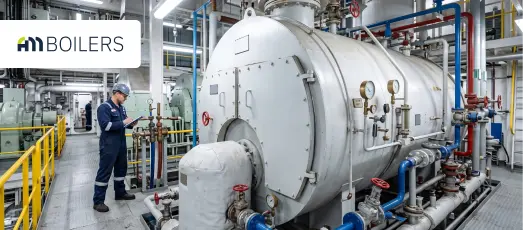
A marine boiler is defined as a type of pressure vessel that transfers heat from combusting a fuel into steam that can be used throughout the ship. Depending on the vessel design, the steam may be needed to heat the cargo, fuel oil, and associated systems, as well as clean tanks, heat up the machinery, and cater for accommodation and other services.
The operation of a marine boiler relies on various associated components working together. The overall performance will be affected if any component fails or a part of the system malfunctions, and the key elements include:
In addition, the fact that the steam pressure is fluctuating may indicate that the pressure-control systems have not malfunctioned or failed; rather, the cause of the problems may be some other, unrelated operating factors such as poor combustion, low feedwater flow, fouling of the heating surfaces, and other variables. This is why a proper marine inspection looks at the condition and interaction of the complete system.
Marine boilers are subjected to severe working conditions, often for extended periods, and have few options for major repairs whilst at sea. A minor failure, which could be rectified with relatively little expense at sea, can soon develop into a more serious and thus more costly undertaking.
Routine marine boiler maintenance allows engineers to discover cases of deterioration or corrosion of the boiler shell, tubes, scale formations, burner defects, refractory deterioration, and control failures before they have an impact upon normal operation. It also provides an excellent chance to check the safe workings and verify that the expected performance of the boiler still remains.
Water treatment is an important parameter. Poor water treatment can lead to the development of scale, the corrosion of heat transfer surfaces, and their subsequent damage. A similar problem of inefficient combustion leads to the accumulation of increased deposits and reduction in performance.
Preventive maintenance on a boiler does not merely prolong its useful life; it helps ensure safe operation of the equipment, maintains predictable performance, and encourages effective control of maintenance expenditure.
Tube leakage is one of the more serious boiler problems found in marine systems. Tubes are exposed to pressure, heat, water chemistry, and repeated thermal changes. Corrosion, scale, overheating, and erosion can gradually weaken them.
Possible initial symptoms may include water loss, steam loss, a change in pressure, and visual leakage. Continued operation without identifying the source will only result in more widespread damage. If the required repair is considered to be tube plugging, repair, or replacement, it is often not sufficient to only replace the failed tube.
Consideration should be given as to what caused the tube to fail: i.e., water chemistry, deposition, overheating, or other causes.
Burner issues often lead to problems with steam pressure, fuel consumption, and boiler efficiency and can be indicated by frequent flame failure, poor or unstable ignition, heavy smoke, inconsistent firing, and loss of stable steam pressure. Many factors may cause this but usually are associated with one or more of the following: contaminated or fouled burner tips; contaminated, poor spray atomizing fuel; failed or faulty ignitors; over/under adjustment of air and fuel; fuel contamination; or control component failure.
Effective boiler troubleshooting should examine the complete combustion system rather than repeatedly resetting the burner. Correcting the underlying cause can prevent further fouling and unnecessary fuel consumption.
It is also of paramount importance to maintain the proper water level in a boiler operating under safe conditions. A low-water condition will prevent the heated surfaces from overheating, and a high-water level can be the cause of poor steam quality and carryover.
Level fluctuations should not just be treated as an alarm to reset when they frequently occur. The feedwater system, controls, valves, gauges, and sensors should all be checked so as to understand as to why the situation is occurring.
Scale and deposits reduce effective heat transfer. As deposits accumulate, it might take additional fuel to produce a given quantity of steam, and “hot spots” can accelerate tube wear and damage. An area where localized boiling generates an abnormally high number of steam bubbles also tends to produce severe heat at that point.
Water with dissolved oxygen can also cause damage. Regular water testing, appropriate treatment, blowdown control, and internal inspection are therefore important parts of boiler maintenance.
Cleaning should be carried out when deposits are identified rather than waiting until they begin affecting performance.
Boiler refractory protects furnace surfaces away from extreme temperatures of combustion. If the refractory has cracks, is eroded, or is damaged, then certain areas can be affected by the heat, and local "hot spots" may be formed.
The refractory should be assessed for cracking, the presence of any loose areas or sections, and its erosion levels as part of routine inspection. This will minimize potential furnace failure and deterioration.
Various pieces of equipment that help ensure the safe operation of the boiler to acceptable parameters, including safety valves, alarms, sensors, and control apparatus, are fitted with instrumentation.
Failure to properly use these items or poor maintenance may lead to wrong readings on instruments or to the inappropriate response of devices, which might otherwise be useful in an emergency.
This inspection, testing, and adjustment shall be carried out in accordance with the maintenance schedule, the supplier's requirements, and any specific criteria associated with this vessel.
Boiler warning signs often appear before a major failure.Engineers should pay attention to these changes during routine operation, as early action can prevent a minor issue from developing into costly downtime or extensive repairs.:
One symptom does not always point to one specific fault. The important step is to investigate unusual changes instead of allowing them to become normal operating conditions.
A practical maintenance program should cover both routine checks and detailed periodic inspections.
Operational checks: Monitor steam pressure, water level, combustion, alarms, feedwater performance, and other key parameters during operation.
Burner checks: Inspect ignition equipment, burner components, fuel delivery, and combustion performance. Investigate repeated flame failures rather than continually resetting the system.
Internal inspection: Examine tubes, pressure parts, refractory, and heat-transfer surfaces for corrosion, deposits, cracks, and deterioration.
Water treatment: Maintain the required water chemistry and keep proper treatment records. Good water management helps control corrosion and deposits.
Safety systems: Check safety valves, alarms, gauges, level controls, and other protective devices according to the applicable requirements.
The exact maintenance frequency should follow the manufacturer's recommendations, vessel maintenance system, class requirements, and operating conditions.
Learn More: Complete Industrial Boiler Maintenance Checklist for UAE Industries
Consistency is key to prevention. Boilers that only get examined when something is wrong are more prone to failure by surprise.
Maintain an accurate history log and trend changes in fuel usage, pressure, temperature, alarms, and combustion efficiency. These can indicate the early stages of deterioration to engineers.
Planned marine inspection is equally important. Visual checks and suitable non-destructive testing can help identify tube thinning, cracks, corrosion, and other defects before they become major failures.
Spare-parts planning also matters. Having commonly required components available can reduce repair delays, particularly when vessels are operating away from major marine service centers.
There is rarely one universal cause of boiler failure. Common contributing factors include:
A full system diagnostic to confirm the underlying cause of failure should be carried out prior to replacement as a failed part will generally be caused by another component failure/wear. Replacing only the obvious part in the hope it was the component failure without the root cause could be money wasted if it simply failed again.
Safety needs to be higher than production and your boiler timetable. You need to operate in line with both approved vessel procedures and the boiler manufacturer's manual, as well as isolate and undertake repairs.
Important precautions include:
A pressurized boiler should never be opened or worked on based solely on an assumption that pressure has been released.
Monitoring and inspection technologies will enable engineers to advance the process of condition-based maintenance from a "fix after failure" approach.
Variables such as temperature, pressure, water level, combustion, etc can be monitored, and examination of the readings trend can be especially informative, as slow degradation may be more evident when viewing the change in readings over time rather than from a single inspection.
Inspection technologies such as UT thickness measurement and other NDT methods may also generate information not available from a "look-see" approach.
However, technology is only part of the answer; data still must be interpreted by competent engineers to ascertain the probable cause and an effective course of action.
A repair decision is typically taken when the boiler vessel integrity remains excellent, and the malfunction only relates to components, and burner repair, valve replacement, refractory repair, component overhaul, tube repairs, or electronic repair could potentially revive the unit. • Replacement may need to be considered when the condition is deteriorated globally, major failures are becoming recurrent; • Spare parts are discontinued; • Fuel efficiency degraded considerably OR where further repairs are not economic." The relevant criteria is boiler date, condition, previous operating experience, repair and maintenance costs, spare parts availability, class requirements, and owner plans for the vessel. Only after this information is gathered can an informed decision be made.
Learn More: How Often Should A Boiler Be Serviced in the UAE?
The Marine and Industrial Boiler Division of Al Mufaddal Engineering & Marine Services, offers complete boiler services, including inspection, repair, maintenance, fabrication, and technical support. Marine operation clients receive in-depth survey and condition assessment services, which comprise visual inspection and suitable testing based on the current needs and condition of the boiler (including the applicable non-destructive testing). Repair includes various tube works, furnace & refractory repair works, and boiler maintenance, and is capable of sending a riding crew on a vessel in case there is an urgent requirement for voyage repairs.
The strengths that lie within both the inspection and repair domain are beneficial during the course of determining why boiler issues recur so that instead of performing just a physical repair to the affected part, a root cause analysis of the defect along with an assessment of system condition is carried out.
It thus helps a client avoid unnecessary work while ensuring a long-term solution is achieved. Having on-call, experienced marine boiler surveyors/technicians will assist you during exigency for immediate technical assistance and urgent support for vessels operating in and around UAE waters.

Boilers exposed to such rigorous operating environments can, surprisingly, be protected from many potential failures by vigilant upkeep and attention. Boiler tube leaks, combustion errors, incorrect feed water quality, corrosion issues, degraded brickwork, and controller failure shouldn’t be tolerated just because the vessel can still function.
A simple maintenance plan consisting of regular inspection, close examination, water control, immediate responses to preliminary findings, and rectification of issues before they escalate to a major failure will serve better.
Good boiler troubleshooting is not only about fixing what has already gone wrong. It is about understanding why the problem developed and preventing it from returning.

