2026-07-09
In an industrial facility, the boiler is arguably one of the hardest-working appliances. It runs at a high pressure, over long hours, withstands a significant amount of heat, and a lot many operations depend on the functionality of your boiler. A boiler working smoothly goes unnoticed, but when it fails, it brings production to an immediate halt.
This is why boiler maintenance services are of great importance. When your boiler is well-maintained, it will be reliable, safe, and efficient. It's for the sake of people's safety, to lower the bills, and to avoid sudden breakdowns, which cause expensive financial expenses.
As factories, plants, and processing units continue to grow at a rapid rate around the UAE, demand for skilled boiler maintenance solutions is escalating just as quickly. Increasingly more organisations understand that preventive maintenance outweighs the cost of a crisis-situation repair.
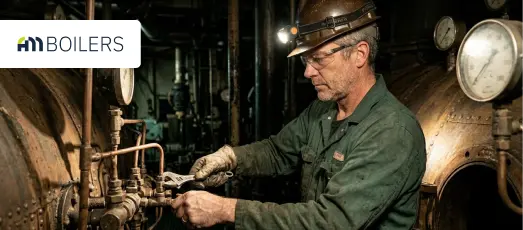
Boiler maintenance refers to the systematic process of examining and repairing a boiler in order to ensure that it is safe to operate and also to make sure that it functions at its optimal capacity. Maintenance is not something that is a one-time service; it should ideally be a consistent process, aimed at preventing any minor glitches from developing into major issues.
What is boiler maintenance in plain words? This refers to the complete process of looking after the boiler to ensure it continues running efficiently. Servicing is the hands-on work done during that process; inspections cover the tests to detect if there is an issue, and the repair involves any actions you take when something has already malfunctioned. Maintenance includes this as a whole.
Boilers are under continuous operation, and that can cause wear over time. Over time, all of that heat, pressure, and motion will take their toll. That’s where regular boiler service and maintenance come into the picture.
Every boiler is operating in an environment where many things are working against it. Scale deposits build up on heating surfaces, the boiler structure suffers from corrosion, and parts deteriorate over time with normal use. Scale and corrosion both lead to decreased efficiency. By adding to the load on the boiler system, these can increase energy costs, as well as other operating costs.
No single boiler service and maintenance program covers everything. A high-quality program will use a mix of different strategies. The four methods to be familiar with are as follows:
Preventive maintenance: Planned and scheduled care at set time intervals to identify and address potential issues as they arise or, preferably, even as they start to emerge. This forms the foundation of a strong program.
Predictive maintenance: Predicting the failure of a part by using data, monitoring, and sensors in order to fix it just in time.
Corrective maintenance: Repairs carried out after a fault has been identified to restore the boiler to working order.
Emergency maintenance: Urgent and unplanned work that has to be carried out when there is an unexpected breakdown that requires a swift response and repair of the boiler.
When a boiler seems to be operating just fine, it is easier to delay routine boiler service and maintenance. Steady operation is actually an indicator of healthy operating equipment that can be compromised through a lack of a good system. Here are a few reasons why keeping up with it all really is important and why boiler maintenance is important.
More importantly, boiler maintenance saves lives. Boilers have very high pressures, and they can do immense harm.
The pressure system can be monitored frequently to ensure that safety relief valves and controllers are in proper working order, thus decreasing the probability of a pressure incident. Valves can be identified with a faulty operation in the course of maintenance, along with leakage problems or issues with the burner.
The harder your boiler has to work, the more fuel it consumes. If your boiler is properly maintained, it uses less energy to achieve the same amount of work.
With heating surfaces free from all scale and soot, heat will perform as desired, saving you on your fuel consumption costs and operational expenses. However, if a boiler is dirty, it will be wasting energy on an hourly basis while running.
The large initial expenditure of a new boiler makes it incredibly sensible to ensure it lasts as long as you need it. Regular maintenance will achieve that goal.
When wear is identified early, regular boiler service and maintenance prevent premature failure of equipment. In particular, the wear and tear on vital parts such as tubes, burners, and pumps is minimized to ensure maximum reliability for years to come.
Breakdowns and failures at a facility are the most expensive unexpected costs for that organisation. Proper maintenance can prevent this at almost all costs.
Planned care avoids unpredictable system failures through proactively maintaining faulty areas before a breakdown can occur, allowing your production process to run reliably so you’re able to meet deadlines and make revenue.
When running a boiler, you have legal and safety obligations. Boiler service and maintenance can help you confidently manage this.
Maintaining adequate record-keeping and inspection can keep you in tune with the requirements of industrial safety in the UAE. It also ensures that environmental as well as functional compliance is adhered to and hence does not subject the business to penalty or closure.
Boilers, because they consist of so many components, require several areas to be checked during maintenance. Understanding boiler maintenance requirements means that you can better schedule them, ensuring you do not miss a necessary check. Main points are listed below:
Water is essential for any boiler's health, but bad water destroys it. Good maintenance requires scheduled water quality tests, scale prevention actions, and the correct application of chemicals. The water contained in a boiler holds small minerals which, over time, settle onto the heating surfaces as tough scales.
Water that is out of balance may also become acidic, which will eat into the steel of the boiler over time from the inside. The water is regularly tested, and the correct chemical is added to maintain a healthy water quality.
Fuel is converted into heat through the burner. When your burner is in the "off" position, it is wasting fuel. By precisely measuring the amounts of fuel and air, the technician makes sure your combustion systems are not only highly efficient and produce as little pollution as possible, but also burn clean and efficiently.
A burner can collect soot and slowly drift away from its optimal position over the course of years. A dirty, untuned burner will lead to an uneven flame, increasing fuel usage and pollutant emissions. A technician will clean the burner and adjust it so it has a bright and consistent flame.
The safety devices are your boiler's ultimate layer of protection. They have to work without failure every time you test the pressure relief valves, the safety interlocks, and even the low-water cut-off devices.
These parts are designed to work right when things go wrong - like a pressure spike or water level dipping too low. If a component breaks down without making a noise, a minor malfunction can soon become a major danger. Every unit undergoes scheduled checks to make sure it works the way it’s supposed to.
The heat exchanger is where heat is actually transferred to the water. The cleaner this is, the more efficient it will be. Maintenance typically means that soot and deposits must be removed, as these will obstruct heat from travelling.
A layer of soot accumulates on one side and a deposit on the other, the two forming a blanket which traps heat rather than lets it flow through. Consequently, the boiler consumes extra fuel simply to achieve the required heat. Removing them by cleaning allows the heat to circulate freely again.
The majority of today’s boilers do, in fact, use electronic circuit boards, which should also undergo routine maintenance. The technician monitors the boiler's electronic sensors, controls, and fully automated sections to maintain a consistent response from the unit.
The sensors are like your boiler's eyes and ears - they detect signals like pressure, water level, and temperature and inform the boiler's central control unit whether and how to react. If the information provided by a sensor is faulty or if a control is broken, your boiler might stop working. Replacing sensors and checking they are all accurate will prevent this from happening.
The steam and condensate system in your plant is responsible for moving thermal energy around. Any leaks and faults can result in the wastage of energy and water. Pipework maintenance and condensate recovery that will help to maximise energy usage efficiency.
The steam that gets into your pipes gives up some of its heat to the pipe and condenses back into hot water (or "condensate" as it is called). When the condensate is not wasted but captured for reuse, it becomes a source of substantial savings. When a steam pipe or trap leaks, the costly condensate and heat escape undetected.
Learn More: What Does a Boiler Service Include? Industrial & Marine Boiler Guide
The answer to how often boiler maintenance and service is needed isn’t fixed, as there are various maintenance tasks, the required frequency of which also varies. Some need to be carried out on a day-to-day basis, while others are yearly.
Some boiler checks need to be made every day the boiler is operating. Daily boiler safety and performance checkups consist of checking the boiler pressure and temperature, as well as ensuring adequate levels of water are present.
These checks don't take more than a few minutes each day but can help avoid problems at a very early stage. A look can tell you whether or not the boiler is working well within its parameters, or whether the performance is degrading. One key area is the water level, since if a boiler does run out of water, this is perhaps the single most hazardous failure.
Each week, some more advanced maintenance helps prevent issues. Weekly checks consist of some blowdown to flush the contaminants from the water and safety control tests to make sure that essential safety mechanisms function properly.
To prevent mineral and scale deposits from building up and hardening on the bottom of the boiler (reducing efficiency), a little water is blown down from the boiler. Safety checks on all alarms and cutoffs should be done weekly to ensure that they work when required.
It is also a good practice to look a little more into each major part of the equipment once per month. A monthly maintenance routine includes inspecting all pumps and burners and checking the entire setup for any slow leaks.
The pumps and burners work continuously. A more thorough inspection once a month helps detect wear before major failure. While small leaks often go unnoticed day-to-day, after a month, it is quite a waste of water, fuel, and energy and also can begin damaging surrounding equipment.
Every few months, there are several technical checks that assist in tuning the performance. Tasks undertaken every 3 months are: combustion analysis, which tells how efficiently it is working, and calibration of instruments to ensure accuracy of readings.
Combustion analysis actually calculates what goes out of the boiler during fuel combustion, and it is this result that will guide the technician to determine if the fuel is being fully utilized or wasted to some extent. Calibration verifies that the sensors and gauges are truly indicating what they claim to be.
The boiler must be put through an intensive, full deep service one time per year. During an annual service, your system will be inspected thoroughly, cleaned fully internally & comprehensively tested to ensure it’s performing properly.
This is the complete service of the whole year, where parts are closed and opened when examined. Built-up scale and soot are removed, any faulty parts are detected, and the boiler safety systems are thoroughly inspected. This is essentially a more detailed check-up.
No boiler operates on the same basis. There are a number of factors that determine the service frequency of your particular system.
Some of the other factors that contribute to boiler maintenance include the type of boiler, how many hours a day it's in use, water quality where you're located, and the industry. A hard-working boiler in a demanding plant will naturally need more frequent care.
For example, a boiler in a busy factory working continuously gets a lot more wear and tear than a boiler operating for just a few hours each day. Scale and corrosion occur more rapidly in hard and dirty water conditions. The sort of fuel that is utilised, along with the demands of your industry, also influence this.
Learn More: How Often Should A Boiler Be Serviced in the UAE?
Being able to carry out boiler maintenance correctly will ensure the safety of your team and equipment, as the entire process needs to follow steps in a proper order to avoid risks. Here’s a step-by-step process for maintaining your boiler.
Always shut the boiler down correctly, and to do this, you will need to safely follow cool-down and isolation procedures.
A boiler contains a lot of heat and pressure and should never be opened when the boiler is hot or running. The cool-down allows for the temperatures and pressures in the boiler to drop to a safe level.
Now look closely at the outer part of your boiler. Carefully check for leaking water, cracked casing, lots of rust, faulty pipes, dodgy joints, or a loose fitting, as they’re often a sign of something much bigger and worse.
The external condition of a boiler usually indicates that an internal fault is occurring. A rust stain, damp patch, or loose bolt could indicate a fault still hidden. Spotting these signs early will allow you to address the small problem before it becomes a larger one.
Test the water and examine the treatment system. Water chemistry will prevent scaling and corrosion, which protects the boiler internally.
Poor water quality is a common cause of boiler failure, making this a more important step than many think. Water is tested to see if it’s too hard, too acidic, or if it contains minerals which cause buildup. If the levels are not right, then the water treatment system is adjusted accordingly to balance the scales. If water quality is maintained, then the boiler can run for many years.
Examine the burner(s) and the combustion setup. A good-burning unit with clean components and the appropriate balance of fuel to air would save on fuel bills.
When burner parts are clean and properly adjusted, they give a clean, hot flame. When a dirty, maladjusted burner is in use, a lot of fuel can be wasted, more heat than is needed is put into the system, and there are more emissions.
Test all safety equipment such as relief valves, cutoff systems, etc. This is because their correct and proper function protects you against serious failures.
Testing shows whether the relief valve will open if the water pressure goes up, and the cut-off will trigger if the water supply gets low. When testing takes place, and one of the safety measures on an appliance or on a boiler proves to be faulty, it must immediately be either replaced or repaired.
Clean interior surfaces, tubes, and the heat exchanger. Removal of soot, scale, and deposits will result in higher efficiency and increased transfer of heat.
The deposits of soot on the fire side of the boiler and the deposits of scale on the water side of the boiler accumulate over time and act like a blanket stopping the heat from traveling. If this coating is removed, the heat travels much better, and the boiler doesn’t need to exert too much effort in producing heat and energy.
Finally, write down everything. Service records let you track a boiler’s service history, aid in meeting boiler compliance obligations, and facilitate better planning.
Good records tell what has been checked, what’s been replaced, and what may be an issue in the future, making it much easier to identify any ongoing issues such as a recurring part wearing out, allowing for preventative action rather than emergency repairs.
Important Note: Industrial Boiler Maintenance is not a do-it-yourself job. These types of systems can be difficult and dangerous to work on, as it involves handling complex machinery. Any system of this kind should always be worked on by a qualified service technician who is aware of the equipment involved, has knowledge of the risks and safety involved, and has adequate knowledge of the equipment to perform any necessary repairs or maintenance.
A boiler communicates what is going wrong if one knows how to spot the signs. If you can get the hint in time, a small trouble will not turn into a complete boiler fault. The following are the most clear warning signs:
Noises, such as banging, knocking, or whistling, can be a sign of trapped air or an internal defect that requires attention immediately.
A healthy boiler runs steadily, so any strange sound can show danger. For example, a knocking or banging noise, sometimes known as kettling, generally occurs because there has been a build-up of limescale inside the system, and the water within the system is boiling in an uneven way.
When you notice a spike in the usage of fuel without there being any obvious cause, then the boiler is overworking. This is typically because the system contains scale or dirt.
When heat cannot pass through easily, the boiler has to burn more fuel to reach the same temperature, and your bills climb as a result. A steady rise in fuel use is one of the clearest signs that the system needs a service.
If you’ve noticed fluctuations and variations in your boiler pressure, you could have control issues, leakages, or issues with the water in your boiler system.
A well-maintained boiler will have a consistent pressure reading. A bouncing gauge needle can indicate one of several issues, including a faulty controller, a leak or pressure loss from the boiler, or a problem with the water pressure in the system. Inconsistent boiler pressure can cause wear to your boiler’s components.
Any sign of water near the boiler needs to be attended to promptly; it can do a tremendous amount of damage to the unit's components. Even a puddle or a slightly damp patch is worth looking at - water near your boiler will typically signify a break, loose connection, or failing seal, and if left, it can encourage rust, spoil other components, and slowly eat away at the boiler itself.
If the boiler is not producing the same amount of steam as it used to, it indicates that something inside it is not working as it should.
The output of steam shows how well the boiler is working. If there is a drop, it should be investigated. The possible causes are scale buildup, an out-of-tune burner, or a water supply fault. Less steam generation means the boiler is working hard for a weaker output.
Frequent outages or alarms often mean there is a problem. If we ignore it, the damage could be even more costly.
Automatic shutdowns and alarms are a default way of protecting itself for a boiler, so if it goes off, it is a sign to watch. It can be a pressure issue, a sensor fault, or anything else. Simply restarting the boiler might pose a risk because there is an underlying fault.
Learn More: Top Warning Signs Your Boiler Needs Immediate Servicing in UAE
Most boiler failures do not happen suddenly. They develop over time, but proper routine repairs protect your boiler long before they strike. Here are some of the common issues you can prevent by undertaking planned maintenance.
Poor water quality creates scale and prevents heat from reaching the surrounding water efficiently. Regular maintenance removes scale and keeps surfaces clean.
Corrosion eats away at the metal parts gradually. But that is easy to manage with the correct water treatment and inspections.
Over time, stress could lead to cracked or ruptured boiler tubes. A regular inspection can reveal these weak spots before they fail.
An out-of-tune burner can mean a waste of money and fuel. Regular maintenance ensures your burner will maintain clean combustion.
Pumps wear down due to normal usage. A timely visual check on all the pump and valve systems helps prevent an unexpected shutdown of operations.
Unsafe operations can be due to faulty sensors and controls. Regular checking will make sure that the boiler’s ‘brain’ remains efficient.
This easy-to-follow checklist helps with maintenance no matter the timeframe and also works as a handy reference tool for you.
| Frequency | Key Checks |
|---|---|
| Daily Checks | Visual inspection, monitor pressure and temperature, check water levels |
| Weekly Checks | Blowdown procedures, test safety controls |
| Monthly Checks | Inspect burners and pumps, detect leaks |
| Quarterly Checks | Combustion analysis, calibration checks |
| Annual Service | Full system inspection, internal cleaning, and performance testing |
Learn More: Complete Industrial Boiler Maintenance Checklist for UAE Industries
One question that is often asked is the price of boiler maintenance. The true response is that it can vary depending on the exact demands and nature of your boiler.
The total cost of boiler maintenance can vary from boiler to boiler due to the differences in size, functionality, and other specifications.
The key contributing factors to the maintenance of a boiler include boiler size, type, fuel type, scope of work to be performed, and parts that need replacement. However, it’s reasonable to anticipate that larger and more complicated systems will take more time and therefore more resources.
There is a big difference between planned care and emergency fixes. Knowing this helps you spend smarter.
It’s crucial to understand that maintenance is planned as opposed to emergency repairs. Scheduled preventative maintenance is planned and therefore predictable. Unplanned or emergency repairs are unpredictable and costly.
The simple fact is that by investing a little bit of money now, you can save a fortune later on. This is the principle that preventive maintenance revolves around. You save on the cost of failure, you extend the life of your gear, and you keep things running at their best. But rather than fixed rates, your best move is to have us give you an individual quotation.
While basic checks matter, real boiler care needs skilled hands and proper tools. Professional boiler maintenance services bring expertise that in-house teams often cannot match. Here is what sets professional boiler service and maintenance apart.
Boilers power many sectors, and each one depends on steady, safe operation. Regular maintenance is essential across all of these industries to keep production smooth and safe.
When protecting your vital equipment is essential, partnering with the best firm can make a significant difference. From complete solutions to industry-leading knowledge, you can rely on Al Mufaddal Boilers to get your needs covered.
With extensive and practical knowledge of industrial and marine boilers, your equipment is handled with complete safety. We can provide comprehensive maintenance programs, from safety components to water treatment, for the whole boiler.
We are here to ensure immediate action is taken in case of unexpected emergencies so that you can get back online in no time. We use reliable spare parts and support every job with technical expertise, ensuring long-term results.
All our customers are unique, and we can create custom service programs based on your boiler type, workload, and industry.

Well-maintained boilers save you money. Investing in regular maintenance of your boiler is a cost-effective investment in the safety, longevity, and ongoing operation of your entire facility.
Keeping maintenance on schedule helps you save money on fuel, reduces risk for your employees and team, and ensures you remain compliant with all UAE health and safety regulations. The price of maintenance is less than the price of a failure. For reliable boiler maintenance services from industry professionals, there is no better time than now to begin your planning.
Plan your boiler maintenance with Al Mufaddal Boilers today and allow us to ensure your equipment operates flawlessly for years to come.

