2026-07-27
There's a specific kind of bad phone call every fleet manager knows. The vessel's sitting at the berth, and the reason is a part, one that should have been right and wasn't. Maybe it was ordered in a rush. Maybe nobody checked it properly against the specification sheet. Either way, a routine job just turned into several days of lost revenue and a very annoyed captain.
That's the real weight behind choosing the right marine spare parts from trusted marine spare part suppliers. But this is not only a matter of maintenance; this is what separates safe vessel operations from failing inspections or even something much worse. Every ship owner, engineer, or fleet manager in the United Arab Emirates faces the same dilemma while placing almost any order: either to receive the part quickly or to receive the part correctly. These two desires conflict all too often, and this is where procurement problems tend to begin.
The cost of getting it wrong rarely shows up immediately either. A part that's cheap or slightly off-spec tends to fail earlier than it should, dragging maintenance bills up and pulling the vessel out of service more often than it needs to be. This guide walks through exactly what to check before an order gets confirmed, the common mistakes worth avoiding, which categories of parts deserve extra scrutiny, and what to look for in a supplier operating in the UAE specifically.
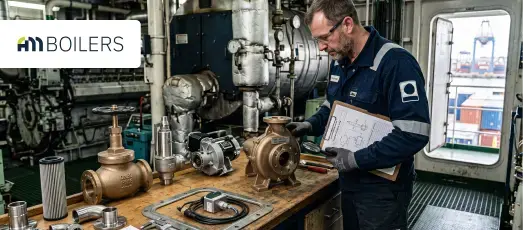
Ship systems only hold up as well as their weakest component. Vibration, saltwater, wide temperature swings, near-constant operation- marine equipment deals with all of it at once. A part that reads as a perfect match on the order sheet but is built from thinner material or sits slightly off-spec can quietly wreak havoc on everything it's connected to.
Even a small valve plays into how a vessel performs overall. Get one wrong, and pressure balances shift, fuel efficiency drops, and nearby components start wearing unevenly. It rarely happens overnight. It builds up over weeks until someone finally notices output has slipped.
There's no getting around safety standards in marine operations. Run uncertified or counterfeit parts, and you're risking a failed inspection, denied port entry, or, in the worst case, an incident that puts crew and cargo at risk. None of that is worth the shortcut.
Every hour a vessel sits docked for an unplanned repair is revenue walking out the door. Poor-quality, cheap parts tend to be prone to breaking much earlier and in a much more unpredictable manner than higher-quality parts. This often translates into the need for maintenance on a regular basis.
A properly matched, genuine component doesn't just do its own job well; it protects everything around it too. Parts that don't quite fit introduce friction and stress that wear down the whole assembly faster, not just the piece that got replaced.
Learn More: The Complete Guide to Boiler Economizers for Industrial and Marine Boilers
This is where most of the actual decision happens. Run through these before any order gets confirmed.
Start simple. Does the part number match exactly? Is it built for your specific equipment model? A supplier worth using will cross-check manufacturer specs against your existing machinery before the part even gets boxed up, which removes most of the risk of an expensive mismatch later.
Look for ISO certifications and class-approved components where they apply. This isn't paperwork for the sake of it. It's proof the part has actually been tested against recognised marine standards and can survive the conditions it's headed into.
Marine environments chew through materials fast. Stainless steel, bronze, brass, marine-grade alloys generally- these get chosen for a reason: they hold up against saltwater corrosion in a way ordinary industrial materials just don't. Worth asking the supplier directly about corrosion-resistant coatings too, especially for anything sitting in constant moisture.
A supplier's history tells you most of what you need to know. How long have they actually been working in the marine? What do other customers say once the sale is done? Do they bring real technical know-how and global sourcing reach, or are they just reselling stock they picked up somewhere else? Buyers skip these questions more often than they should.
The better marine spare part suppliers don't stop once the box ships. They'll walk you through the product, help during installation, and pick up the phone when something's not going to plan. That kind of support saves real hours during a repair that's already on the clock.
Know what the warranty covers, what will happen if the part breaks down before time, and if the supplier guarantees the product even after selling it. If the supplier is convinced about their product, they support it through the warranty terms.
Timing decides a lot in marine operations. Does the supplier keep local stock of the common parts? Can they move on an emergency order while a vessel waits? A supplier with global reach and local inventory is often the whole difference between a same-day fix and a week of costly delay.
The lowest quote is always tempting. But total ownership cost is the number that actually matters; once maintenance savings and reliability over the part's working life get factored in, a slightly pricier component often ends up cheaper overall.
It is always necessary to request certificates, testing reports, and the history of the parts. Full batch numbers and traceability will help protect you when a warranty claim, audit, or regulator requires proof of installation. In addition, it is one of the most straightforward indications that your supplier considers quality to be important from the start.
Quick Checklist Before Buying Marine Spare Parts
Before completing your purchase, apply the checklist below to make sure you select high-quality and compatible spare parts for your marine vessels.
| Factor to Check | Why It Matters |
|---|---|
| OEM Compatibility | Prevents incorrect fit, equipment damage, and performance issues. |
| Quality Certifications | Confirms the part meets recognized marine safety and quality standards. |
| Material Quality | Improves corrosion resistance and extends service life in harsh marine environments. |
| Supplier Reputation | Ensures genuine products, reliable sourcing, and expert technical guidance. |
| Technical Support | Helps with part selection, installation, and troubleshooting. |
| Warranty & After-Sales Service | Protects your investment and provides support if issues arise. |
| Delivery & Availability | Minimizes vessel downtime by ensuring timely replacement parts. |
| Documentation & Traceability | Supports compliance, audits, and warranty claims with complete records. |
| Long-Term Value | Reduces maintenance costs and improves equipment reliability over time. |
Learn More: Complete Industrial Boiler Maintenance Checklist for UAE Industries
Even experienced fleet managers slip into these mistakes occasionally.
Certainly, price is important, but it should not be the only factor influencing the decision. The least expensive alternative will invariably have hidden costs because it is less durable or because it will simply break when put to work. The apparent saving seen in the invoice is bound to result in costly repairs a few months down the road.
Assuming a part will "probably fit" without checking it against the manufacturer's spec sheet is a bet that rarely pays off. Confirm it before the purchase, not after it's already bolted in. Even a small mismatch in size or thread can force a second order and a second delay.
Sourcing from a vendor nobody's vetted, just to save a bit of time, opens the door to counterfeit or substandard parts with no one accountable when things go sideways. Once that part is installed, there's no easy way to trace where it actually came from.
Some buyers skip the certification check to speed things along. It's a shortcut that can backfire badly if the part fails inspection, or fails at sea, which is a far worse place for it to happen. A certificate takes a few minutes to review; a failed part at sea takes a lot longer to fix.
Not reading the fine print on warranty coverage can leave you exposed if the part underperforms not long after it's installed. Some warranties look solid on the surface but exclude the exact situation you'd actually need them for.
Postponing procurement until the product fails will almost certainly result in costly and hurried decision-making that could have been avoided through some basic planning. A basic inventory audit of any aging component can save you from all of this hassle.
Learn More: What to Do During a Marine Boiler Emergency Near Dubai, UAE Port
Some categories carry more risk than others and deserve a closer look before approval.
The various parts that make up the boiler have to function in conditions of high stress and extreme heat, and hence even a small difference in their dimensions or material properties may become a significant issue very quickly.
Engine parts take constant mechanical stress, which makes OEM compatibility and material quality non-negotiable here more than almost anywhere else. A poor match here tends to show up as vibration or power loss long before it fails outright.
Pumps handle fuel transfer, cooling, and more, so a failure here tends to ripple across several onboard systems at once rather than staying contained. That's why even a small pump part deserves the same scrutiny as a major component.
These manage critical flow and pressure functions. One faulty valve can compromise the safety and efficiency of an entire system, not just itself. A valve that sticks or leaks under pressure rarely gives much warning beforehand.
Heat exchangers rely on tight tolerances and corrosion-resistant materials to keep performing efficiently over time; without them, output drops fast. Even a slightly worn gasket here can throw off the whole system's efficiency.
Vessels today run heavily on automation, so electrical and control components need to meet strict standards for both quality and compatibility. A single faulty sensor or relay can quietly throw off decisions the whole system relies on.
Filtration parts protect everything downstream, so a substandard filter can lead to contamination and faster wear elsewhere in the system before anyone notices. Regular replacement here is one of the cheapest ways to protect more expensive equipment.
Safety-related parts are never the place to cut corners. These directly protect the crew and vessel when something actually goes wrong onboard. They're also usually the parts inspectors check first, and for good reason.
The UAE marine sector deals with pressures that shape how spare parts should be sourced here specifically.
The climate doesn't help. Intense heat combined with high humidity speeds up saltwater corrosion on exposed metal parts far faster than it would in a cooler climate. Add the high operating temperatures vessels already run under, and material selection matters even more than usual.
UAE ports also run on fast turnaround, so any hold-up in spare parts availability can throw off shipping schedules quickly. Offshore operations bring another layer into the picture too, often needing fast logistics support in locations that aren't easy to reach in the first place.
That's exactly why having a supplier close by is a genuine advantage. UAE-based suppliers can respond faster than international ones simply because the distance is shorter. Staying with a local supplier also makes it easier to stay aligned with UAE marine regulations.
Learn More: What Does a Boiler Service Include? Marine & Industrial Boiler Servicing Guide
Reliability, technical know-how, and speed that's what sets Al Mufaddal Engineering & Marine Services apart among marine spare part suppliers and leading marine spare parts suppliers in UAE.
Our stock covers a wide range of marine spare parts, sourced through manufacturers we've worked with for years. Nothing leaves our warehouse unless it's genuine and already quality-checked, so what shows up on your vessel matches what was actually ordered.
Before an order ships, our team goes through compatibility and specs themselves rather than leaving it to chance. That, paired with fast delivery to ports across the UAE, cuts down on waiting and keeps unplanned downtime off your schedule.
Pricing stays fair too. We don't cut into quality just to hit a lower number. Commercial, offshore, industrial, whatever the operation looks like, the service is shaped around what that fleet actually needs rather than pulled from a standard catalogue.

There's no shortcut worth taking here. What gets ordered today shapes how safe the vessel stays, how often it's actually in service, and what the repair bills look like months down the road.
Fit, certification, material, and who's supplying it- get these four right, and most of the risk disappears before it ever becomes a problem. Skip any one of them, and you're gambling with downtime you didn't plan for. The fleets that stay ahead of this usually aren't lucky; they're just careful about where their parts come from.
Get these decisions right consistently, and it shows: less downtime, safer vessels, and lower maintenance costs over time.
Need a supplier who won't cut corners on any of that? Al Mufaddal Engineering & Marine Services can help you source genuine, quality-tested marine spare parts, backed by real technical support and fast delivery across the UAE. Reach out to our team to get started.

